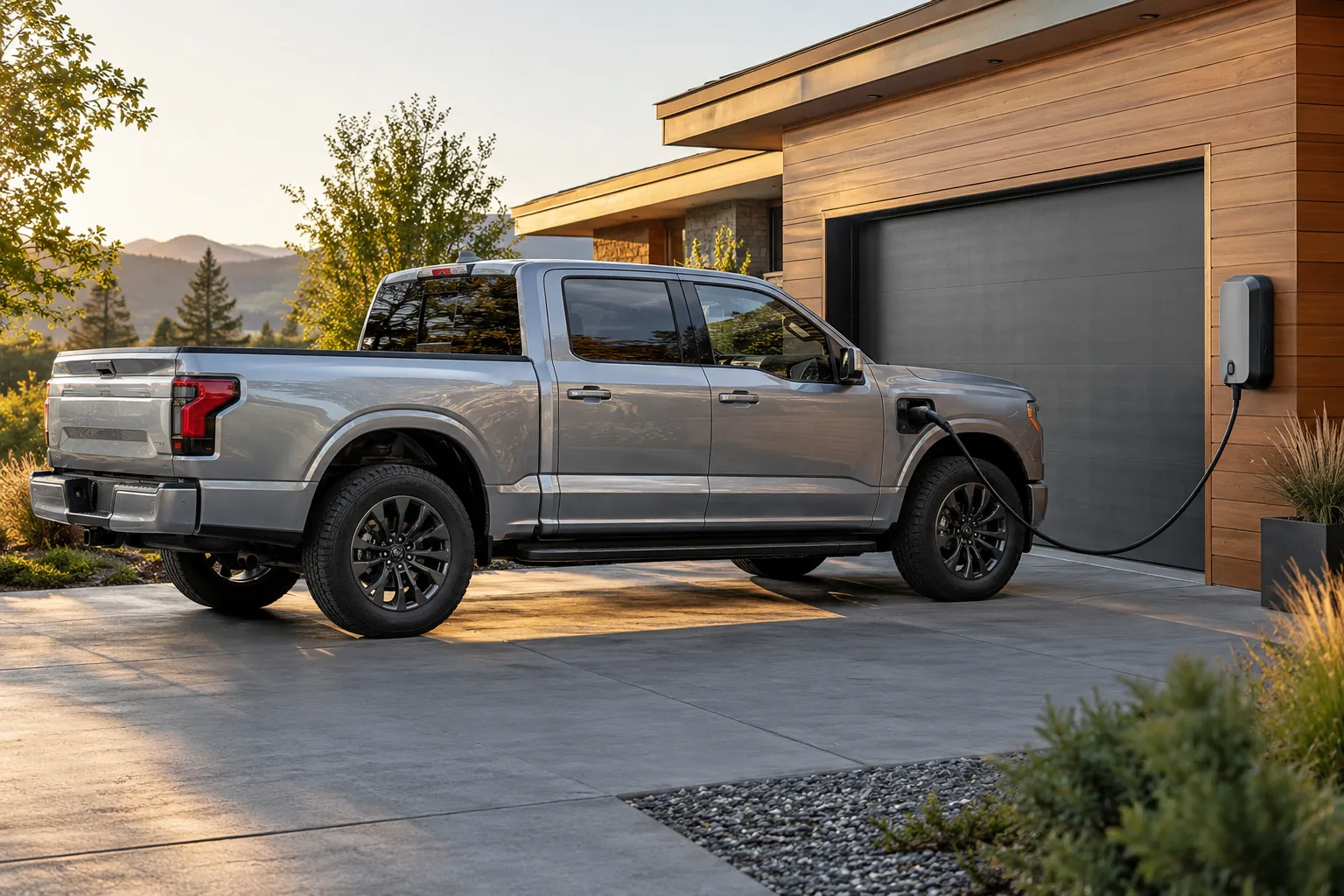
Can an Electric Truck Power Your Home? What to Check Before Buying
Separate appliance power from home backup
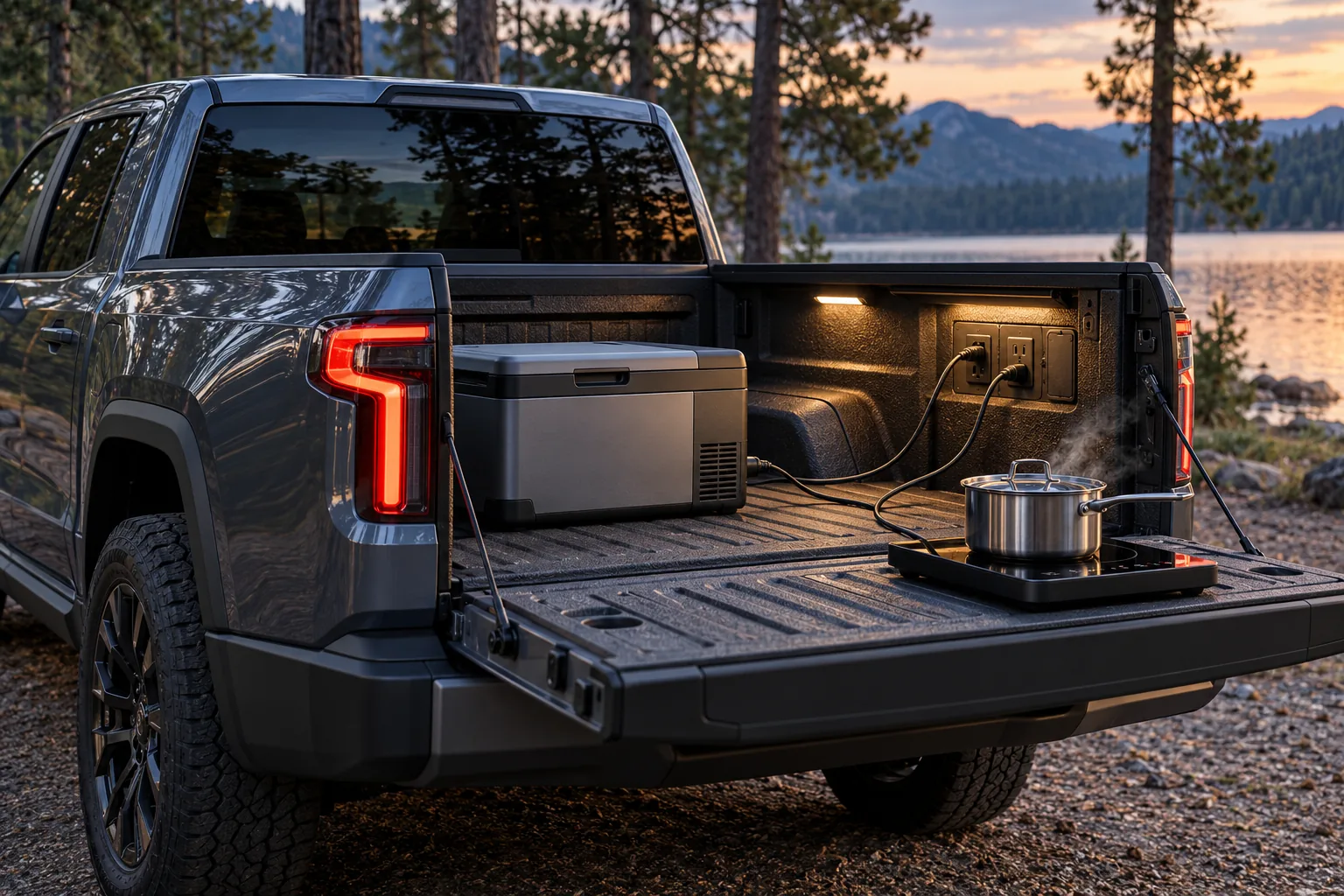
Begin with what you want to keep running. Powering a refrigerator from an approved truck outlet is a different project from supplying installed household circuits during an outage. Vehicle-to-load describes supplying external equipment; vehicle-to-home uses a compatible system to supply a properly equipped home. The presence of bed outlets does not prove that a truck supports your intended home-backup arrangement.
Write two lists: appliances that can be powered directly under the manufacturer’s instructions, and fixed household loads that require a professionally designed connection. Keep this distinction when comparing vehicles. A useful camping power feature is not automatically a substitute for a home energy system.
Verify the whole system, not just the truck badge
Ask for written compatibility confirmation covering the model year, installed vehicle hardware, software, charging equipment and home integration equipment. Ford’s Lightning manual describes a system involving the vehicle, Charge Station Pro and home integration equipment. GM Energy and Tesla publish their own compatibility and installation requirements. These are different systems, not interchangeable accessories.
For a used truck, confirm which equipment is included in the sale and which hardware remains at the previous owner’s property. Ask whether activation, ownership transfer or software steps are required. A seller’s photograph of the truck connected to a house does not establish what will work at your address.
Check power and energy as separate limits
Power, measured in kW, determines which loads a system can support at once. Energy, measured in kWh, determines how much electricity is available over time. Ask the installer to assess running loads and startup demands, especially for pumps, compressors and heating equipment. A large battery does not remove a lower output-power limit.
For a hypothetical energy budget, suppose 60 kWh is available for backup after the driving reserve and assumed conversion losses. At a constant average load of 1 kW, the arithmetic gives 60 hours. This is an illustration, not a runtime promise for any truck or house. Actual loads cycle, conditions change and the vehicle may not arrive fully charged.
Ask the installer how the home stays isolated
Have a qualified electrician or approved installer assess the service, selected circuits, permits, utility requirements and transfer or isolation equipment. Ask what happens when an outage begins, when grid power returns and when the truck is unplugged. Existing solar panels or a stationary battery need an explicit compatibility assessment rather than an assumption that the systems will cooperate.
Never feed truck power into a household wall outlet or use a cable with exposed energized plug ends. The CPSC warns that male-to-male cords used for backfeeding create electrocution and fire hazards. Use only a connection designed and installed for the specific backup system; this guide is not wiring instructions.
Buy for the outage routine you can maintain
Compare complete installed quotes, including required equipment, electrical work, approvals and any ongoing software or service cost. Check warranty terms for the intended use directly with the manufacturer. Do not count projected grid-service payments or bill savings unless an available program and its conditions have been confirmed for your address.
Finally, decide who needs the truck during an outage. Leaving for work or driving to a charger removes that energy source from home. Agree on a driving reserve, essential loads and a fallback for when the vehicle is away. The most useful system is one whose limits the household understands before the lights go out.